

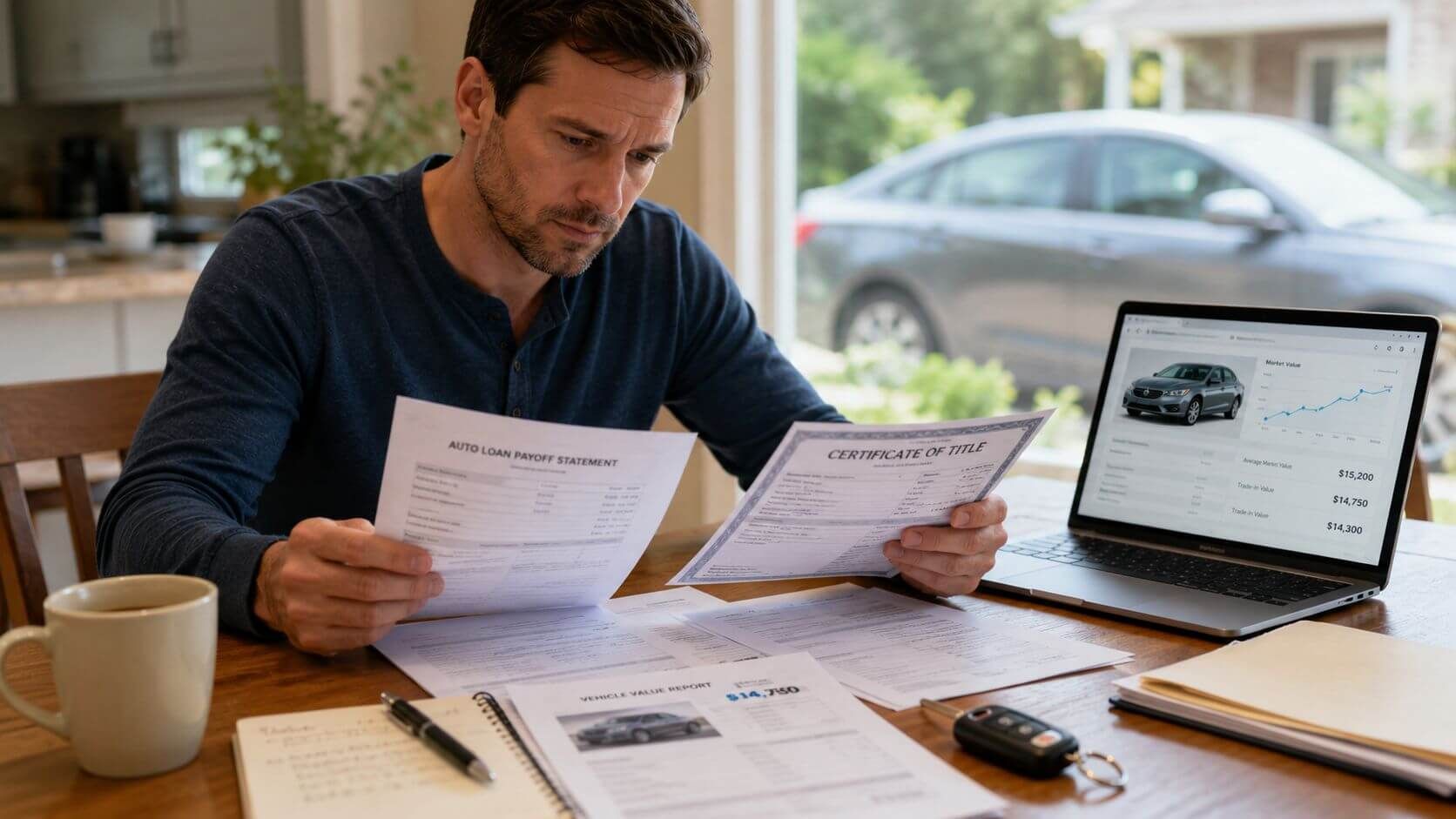
Selling a car is already a big decision. Selling a car that still has a loan balance adds another layer of paperwork, timing, and trust.
The good news is that you can usually sell a financed vehicle. The important part is making sure the loan gets paid off, the lien is released, and the buyer receives proper ownership documents. If you skip those steps, the sale can become confusing or risky for both sides.
A loan balance does not automatically stop you from selling. It simply means your lender still has a financial interest in the vehicle. Before you list the car, accept payment, or promise a buyer the title, you need to understand how the payoff and title process works.
Here is a beginner-friendly guide to selling a car with a loan balance.
What Does It Mean to Sell a Car With a Loan Balance?
When you finance a car, the lender usually has a lien on the vehicle. A lien is a legal claim connected to the vehicle until the loan is fully paid.
That means even though you drive the car and may be listed as the registered owner, the lender still has rights tied to the title. In many cases, the title will show the lender as the lienholder. Depending on your state, the lender may hold the physical title or the lien may be recorded electronically.
Before ownership can be transferred cleanly to the next buyer, the lien needs to be paid off and released.
This is why buyers often hesitate when a seller says, “I still owe money on it.” The buyer wants to know that their payment will clear the loan and that they will actually receive a valid title.
Step 1: Find Out Your Exact Payoff Amount
Your loan balance and payoff amount are not always the same.
The balance you see on your monthly statement may not include daily interest, fees, or other payoff adjustments. A payoff quote is the amount required to fully close the loan by a specific date.
Before listing the car, contact your lender and ask for:
- Current payoff amount
- Payoff expiration date
- Daily interest after the quote expires
- Accepted payment methods
- Processing timeline
- Lien release process
- Title release process
- Whether the lender has a local branch
- Whether a buyer can pay the lender directly
Write this information down. It will help you explain the process clearly to potential buyers.
Do not estimate the payoff from memory. If you quote the wrong number, you may end up owing more than expected at closing.
Step 2: Check Whether You Have Positive or Negative Equity
Once you know the payoff amount, compare it with the vehicle’s current market value.
Use a tool to check your car’s value before setting a price. A market value lookup can help you estimate a realistic selling range based on the vehicle’s year, make, model, trim, mileage, and comparable listings.
Then compare:
Estimated sale value minus loan payoff = equity
If the car is worth more than the loan payoff, you have positive equity.
Example:
- Estimated sale value: $18,000
- Loan payoff: $14,500
- Positive equity: $3,500
If the car is worth less than the loan payoff, you have negative equity.
Example:
- Estimated sale value: $15,000
- Loan payoff: $18,000
- Negative equity: $3,000
This matters because negative equity means the sale price will not fully pay off the loan. You will need to cover the difference before the title can be cleared.
Step 3: Check for a Lien by VIN
Before selling, it is smart to confirm how the lien appears in vehicle records. This helps you understand what a buyer may see when they research the car.
A check for a lien by VIN can help identify lienholder information, lien dates, lien state, and other title-related details when available. This is useful because buyers may run their own checks before agreeing to the purchase.
If a lien appears, that does not mean the vehicle cannot be sold. It simply means the lien needs to be handled properly.
You should be ready to explain:
- Who the lender is
- How much remains on the loan
- How the payoff will be made
- When the lien release will be available
- How the buyer will receive the title
Being upfront builds trust and prevents confusion later.
Step 4: Decide Whether to Sell Privately or Trade In
There are two common ways to sell a car with a loan balance: private sale or dealer trade-in.
Selling Privately
A private sale may bring a higher price, but it requires more coordination. The buyer will likely want assurance that their money goes toward the loan and that the title will be released properly.
This can work well if:
- You have positive equity
- The buyer is patient and understands the payoff process
- Your lender can provide clear instructions
- You can complete the transaction at a bank, credit union, or lender office
- You have all paperwork ready
Private sale can be more profitable, but it also requires more trust and documentation.
Trading In
Trading in may be easier because the dealer usually works directly with the lender. The dealer can confirm the payoff amount, apply your trade-in value, and handle much of the paperwork.
This can work well if:
- You are buying another vehicle
- You want a simpler process
- You have negative equity and need financing options
- You do not want to manage a private buyer
- You want the dealer to handle payoff coordination
The trade-off is that a dealer offer may be lower than what you could get from a private buyer.
Step 5: Be Honest With Buyers About the Loan
Do not hide the loan balance from a buyer. It will usually come out during the title process or vehicle history review anyway.
A simple explanation is enough:
“The vehicle still has a loan balance. I already requested the payoff amount from the lender. We can complete the transaction through the lender or bank so the loan is paid off and the title release process starts properly.”
This sounds much better than avoiding the topic or saying, “I will send the title later.”
A serious buyer may still move forward if the process is transparent.
Step 6: Use a Safe Payoff Process
The safest process depends on your lender and state rules, but the goal is the same: make sure the loan is paid and the buyer is protected.
Common options include:
- Completing the transaction at the lender’s branch
- Having the buyer pay the lender directly for the payoff amount
- Having the buyer pay the payoff amount to the lender and the remaining equity to you
- Using a bank or credit union to verify funds
- Using a legitimate escrow service for long-distance transactions
- Trading in through a licensed dealer
Avoid informal arrangements where the buyer gives you the full amount and waits indefinitely for the title. That creates unnecessary risk and may make buyers uncomfortable.
If the buyer is financing the purchase, their lender may also want to coordinate directly with your lender.
Step 7: Understand Positive Equity
If you have positive equity, the transaction is usually easier.
For example, if the buyer agrees to pay $20,000 and your loan payoff is $16,000, the payoff goes to the lender and the remaining $4,000 goes to you.
The key is documenting the split clearly.
You may need:
- Payoff quote
- Bill of sale
- Odometer disclosure
- Lien release confirmation
- Title transfer paperwork
- Receipt for any payment you receive
- State-required forms
Make sure you know when the title will be released and whether it goes to you, the buyer, the buyer’s lender, or the state motor vehicle agency.
Step 8: Understand Negative Equity
Negative equity is more complicated because the sale price does not cover the full loan payoff.
For example, if the car sells for $15,000 but your payoff is $18,000, you need to bring $3,000 to close the loan.
You may handle negative equity by:
- Paying the difference out of pocket
- Delaying the sale until you reduce the loan balance
- Trading in and rolling the difference into a new loan, if approved
- Refinancing or using another funding option
- Lowering expenses elsewhere before selling
Be careful about rolling negative equity into another auto loan. It can make the next vehicle more expensive and may put you underwater again.
If you cannot cover the difference, you may not be able to deliver a clear title to the buyer.
Step 9: Confirm Title and Lien Release Requirements
Title and lien release rules can vary by state. Some states use electronic lien and title systems. Others rely more on paper documents. Some lenders send the released title to the owner, while others send documents to the state or buyer’s lender.
Before closing the sale, confirm the exact process.
Use VinAudit’s state vehicle records guide to find official state vehicle record instructions, forms, portals, and agency contact details. This can help you understand where to verify title or lien status if the process is unclear.
You may need to ask:
- Does the lender release the lien electronically?
- Will a paper title be mailed?
- Who receives the title after payoff?
- How long does the release normally take?
- Are state forms required?
- Is a notarized lien release needed?
- Can the buyer register the vehicle before the title arrives?
- Are there special rules for private sales?
Do not assume the process is the same in every state.
Step 10: Run a Title Check Before Listing
A title check by VIN can help you review title status, possible liens, title brands, registration history, and other issues that may affect the sale.
This helps you prepare before buyers start asking questions.
If the report shows a lien, that is expected if the loan is still active. If it shows title brands, odometer concerns, salvage history, theft records, or other issues, you should know that before pricing or negotiating.
A clean and transparent history can make the sale easier. A complicated history does not always prevent the sale, but it should be disclosed and priced accordingly.
Documents You May Need
Before selling, gather the documents buyers may request:
- Loan payoff quote
- Lender contact information
- Registration
- Driver’s license or ID
- Bill of sale
- Odometer disclosure
- Maintenance records
- Vehicle history report
- Title or title information, if available
- Lien release documents after payoff
- State-specific transfer forms
Having these ready makes you look organized and trustworthy.
Common Mistakes to Avoid
Avoid these mistakes when selling a financed car:
- Guessing the payoff amount
- Hiding the loan from the buyer
- Accepting unsafe payment methods
- Promising immediate title delivery when the lender still holds it
- Forgetting daily interest on the payoff quote
- Selling with negative equity and no plan to cover the difference
- Not confirming state title-release rules
- Not getting payment and payoff details in writing
- Letting the buyer drive away without a clear agreement
- Ignoring title brands, liens, or record issues
The goal is to make the transaction clean for both sides.
Final Takeaway
Selling a car with a loan balance is possible, but it needs to be handled carefully. The lender’s lien must be paid off, the release must be documented, and the buyer needs confidence that they will receive proper ownership.
Start by getting your payoff amount. Check your market value. Confirm lien and title status. Decide whether private sale or trade-in makes more sense. Then complete the payoff and title-transfer process through the lender, bank, dealer, or state agency when needed.
A financed car can still be sold smoothly. The key is transparency, documentation, and making sure the lien is fully resolved before the sale is considered complete.
FAQs
Can I sell a car if I still owe money on it?
Yes, but the loan must be paid off and the lien must be released before the buyer can receive clear ownership. Work with your lender to understand the payoff and title-release process.
What is a lien on a car?
A lien is a lender’s legal claim on the vehicle until the loan is paid. It is usually connected to the title and may need to be released before ownership can transfer cleanly.
What happens if I sell my car for less than I owe?
You have negative equity. You will need to pay the difference between the sale price and the loan payoff before the lien can be released.
Is it easier to trade in a car with a loan?
Often, yes. Dealers commonly work directly with lenders to pay off trade-in loans and handle paperwork. However, the trade-in offer may be lower than a private-sale price.
Should I tell the buyer there is still a loan?
Yes. Being upfront about the loan balance and lien payoff process helps build trust and prevents problems during title transfer.