

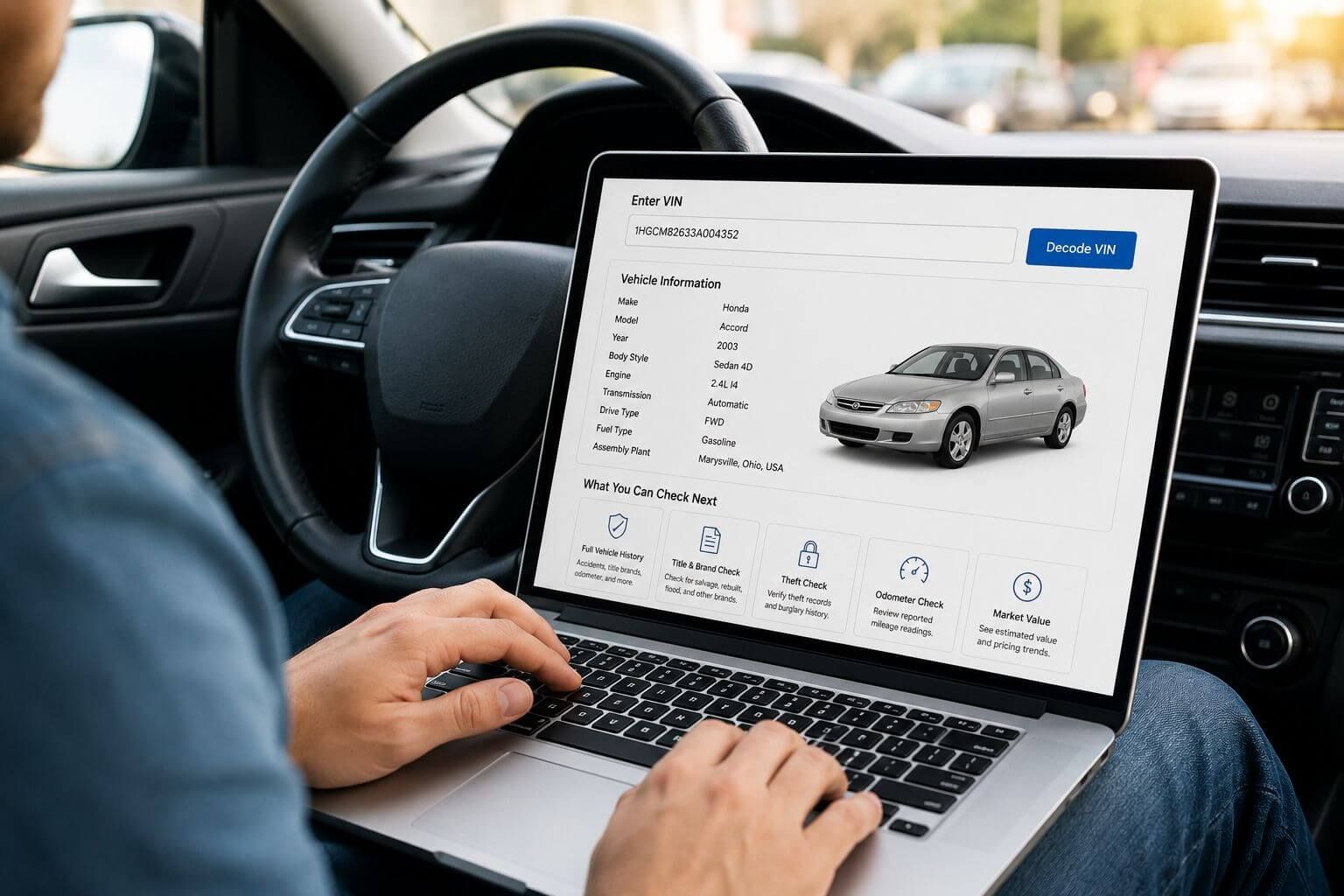
When you are researching a used car, the VIN is one of the best places to start. A free VIN decoder can quickly confirm what a vehicle is supposed to be: its year, make, model, body style, engine, trim, and other factory-built details.
A paid VIN check goes deeper. It can help you understand records tied to the vehicle’s past, such as title brands, odometer readings, theft records, salvage history, prior sale records, lien indicators, and other risk signals that may affect the car’s value or ownership.
Both tools are useful, but they do not answer the same question.
A VIN decoder helps answer: “What vehicle is this?”
A paid VIN check helps answer: “What has happened to this vehicle?”
Understanding the difference can help buyers avoid costly surprises, help sellers describe their vehicles more accurately, and help dealers or automotive businesses make better data-backed decisions.
What Is a VIN?
A Vehicle Identification Number, or VIN, is a unique 17-character code assigned to a vehicle. It works like a vehicle fingerprint because no two vehicles should have the same VIN.
The VIN can identify important details about the vehicle, including the manufacturer, model year, body type, engine, restraint system, plant of manufacture, and other specifications. You can usually find it on the driver-side dashboard near the windshield, on the driver-side door jamb, on the title, registration, or insurance documents.
For motorcycles, ATVs, trailers, and other vehicle types, the VIN may appear on the frame, steering neck, or another manufacturer-specific location.
Before you spend money on a vehicle history report, it makes sense to decode the VIN first. This gives you a quick way to confirm that the vehicle being advertised matches the basic information tied to the VIN.
What a Free VIN Decoder Can Tell You
A free VIN decoder reads the information built into the VIN itself. It is especially useful when you want to verify basic vehicle details before taking the next step.
A VIN decoder may show:
- Year, make, and model
- Vehicle type
- Body style
- Engine size or engine configuration
- Transmission or drivetrain details, when available
- Trim or series details
- Fuel type
- Assembly plant
- Country of manufacture
- Manufacturer information
This can be helpful when checking an online listing. For example, a seller may describe a vehicle as a higher trim, but the VIN may point to a different version. A listing may say the car has a specific engine, but the VIN may decode to another configuration. Sometimes this is just a listing mistake. Other times, it is a sign that you need to ask more questions.
A decoder is also helpful when comparing vehicles. If you are shopping for a used SUV, truck, sedan, motorcycle, or ATV, decoding the VIN can help you confirm whether the vehicle matches the features you are looking for before you spend time visiting the seller.
What a Free VIN Decoder Cannot Tell You
A VIN decoder is not the same as a full vehicle history report.
This is where many used car buyers get confused. A VIN decoder can tell you what the vehicle was built as, but it usually cannot tell you everything that happened after the vehicle left the factory.
A free VIN decoder usually cannot fully answer questions such as:
- Has the vehicle been in a major accident?
- Was it ever declared salvage, junk, rebuilt, or flood-damaged?
- Does it have title brands?
- Are there odometer inconsistencies?
- Has it been reported stolen?
- Was it sold through a salvage auction?
- Are there prior sale listings?
- Are there lien or impound indicators?
- Was it previously used as a fleet, rental, or commercial vehicle?
This distinction matters. A vehicle can decode correctly and still have serious history issues. The year, make, model, and engine may all match, but the vehicle may still have a branded title, mileage concern, theft record, or salvage event.
In simple terms, a free VIN decoder confirms identity. It does not replace a deeper history check.
What a Paid VIN Check Adds
A paid VIN check looks beyond the characters inside the VIN. It searches vehicle records associated with that VIN and helps reveal history signals that may affect value, ownership, safety, or resale potential.
Depending on available data, a paid VIN check may include:
- Title history
- Title brands, such as salvage, junk, flood, rebuilt, or odometer-related brands
- Reported odometer readings
- Theft records
- Salvage or junk yard records
- Insurance total loss indicators
- Prior sale listings
- Auction or salvage auction history
- Lien, impound, or export indicators
- Market value and ownership-related insights
This information can help you spot red flags before you buy. For example, a vehicle may look clean in photos but have a salvage record. A seller may claim the car has low mileage, but historical readings may suggest an inconsistency. A vehicle may have moved across states, making title history especially important to review.
A full vehicle history report does not replace a mechanic’s inspection, but it can help you decide whether the vehicle is worth inspecting in the first place.
Free VIN Decoder vs Paid VIN Check: Quick Comparison
| Question | Free VIN Decoder | Paid VIN Check |
|---|---|---|
| What year, make, and model is the vehicle? | Yes | Yes |
| What engine or body style does it have? | Often yes | Often yes |
| Where was it assembled? | Often yes | Often yes |
| Does the listing match the VIN? | Often yes | Yes |
| Has the vehicle had a branded title? | Usually no | Often yes |
| Are there reported odometer readings? | Usually no | Often yes |
| Has it been reported stolen? | Usually no | Often yes |
| Has it gone through salvage or junk channels? | Usually no | Often yes |
| Are there prior sale records? | Usually no | Often yes |
| Can it help with a buying decision? | As a first step | As a deeper risk check |
The easiest way to remember the difference is this: use a VIN decoder to verify the vehicle’s identity, then use a paid VIN check to investigate the vehicle’s history.
When a Free VIN Decoder May Be Enough
A free VIN decoder may be enough when you are still in the early research stage.
For example, it can help when you are:
- Comparing several used vehicles online
- Checking whether a listing has the correct year, make, and model
- Confirming engine or body style details
- Looking up basic vehicle specifications
- Preparing to sell a car and wanting accurate listing details
- Checking whether a VIN appears to be formatted correctly
For casual research, a decoder is a smart starting point. It helps you avoid wasting time on listings that do not match what you are looking for.
A decoder is also useful for sellers. If you are creating a vehicle listing, decoding the VIN can help you describe the car accurately. That can reduce confusion and make the listing feel more trustworthy to potential buyers.
When You Should Upgrade to a Paid VIN Check
You should consider a paid VIN check when you are close to making a purchase decision.
At that point, you are no longer just confirming what the vehicle is. You are trying to understand whether there are risks attached to it.
A paid VIN check becomes more important when:
- The price seems unusually low
- The seller is rushing the transaction
- The vehicle was recently moved from another state
- The title status is unclear
- The odometer reading seems unusually low
- The vehicle has signs of repainting or major repair
- The listing has limited photos or vague details
- You are buying from a private seller
- You plan to finance, insure, or resell the vehicle
- You are a dealer evaluating inventory or trade-ins
Used car purchases often involve imperfect information. The seller may not know the full history. A listing may be incomplete. A title issue may not be obvious from a walkaround inspection. A full vehicle history report gives you another layer of protection before you commit.
Why This Matters for Used Car Buyers
A used vehicle can look good on the outside and still have problems in its records. That is why relying on only one tool is risky.
A VIN decoder can help you catch basic mismatches. A paid VIN check can help you catch deeper issues. A pre-purchase inspection can help uncover physical and mechanical problems. Together, these steps give you a much stronger view of the vehicle.
Before buying, a good process looks like this:
- Decode the VIN to confirm basic vehicle details.
- Run a full vehicle history report.
- Compare the report with the seller’s claims.
- Review the title and registration documents.
- Ask the seller about any gaps, brands, or inconsistencies.
- Get a professional inspection before finalizing the purchase.
This approach does not guarantee a perfect vehicle, but it can help you avoid obvious mistakes and negotiate with better information.
Why Businesses Need More Than Basic VIN Decoding
For dealers, lenders, insurers, marketplaces, repair platforms, and automotive software companies, VIN data is not just a consumer research tool. It can support everyday business decisions.
A dealer may use VIN-based history data to evaluate trade-ins and avoid risky inventory. A marketplace may use VIN decoding to improve listing accuracy. A lender may use vehicle history signals as part of its risk review. A repair platform may use VIN specifications to match services, parts, or maintenance recommendations more accurately.
For companies that need vehicle history data at scale, a vehicle history report API can make this process more efficient. Instead of manually checking one vehicle at a time, businesses can integrate VIN-based data into their own platforms, tools, and workflows.
That is especially valuable for teams that handle large volumes of vehicles, listings, appraisals, or customer inquiries.
Common Mistakes to Avoid
The biggest mistake is assuming that a decoded VIN means the vehicle has a clean history. It does not.
A second mistake is using a vehicle history report as a replacement for an inspection. Records can reveal important history, but they may not show every mechanical issue, repair quality problem, or hidden damage.
A third mistake is ignoring small inconsistencies. If the VIN decode, seller description, title, odometer reading, and report do not line up, pause and ask questions. A simple typo is possible, but so is a more serious issue.
The best used car decisions usually come from combining multiple sources of information.
Final Takeaway
A free VIN decoder and a paid VIN check are both useful, but they serve different purposes.
Use a free VIN decoder when you want to confirm the vehicle’s basic identity and specifications. Use a paid VIN check when you need to evaluate the vehicle’s history, risk, value, and potential ownership concerns.
If you are just browsing, start with the free VIN decoder. If you are seriously considering a purchase, run a full vehicle history report before you commit.
The VIN is only the starting point. The real value comes from knowing how to read the information behind it.
FAQs
Is a free VIN decoder the same as a vehicle history report?
No. A free VIN decoder reads the information encoded in the VIN, such as the year, make, model, engine, body style, and assembly details. A vehicle history report searches records connected to the VIN, such as title history, odometer readings, theft records, salvage records, and other history indicators.
Can a VIN decoder tell me if a car was in an accident?
Usually, no. A VIN decoder mainly identifies the vehicle’s factory details. Accident history, when available, is usually found through a vehicle history report or other record sources.
Can a vehicle decode correctly but still have a bad history?
Yes. A vehicle can have a valid VIN and still have a branded title, mileage inconsistency, salvage record, theft record, or other history concern.
Should I run a paid VIN check before buying a used car?
Yes, especially if you are seriously considering the vehicle. A paid VIN check can help uncover risk signals that a free decoder may not show.
What should I do if the VIN decoder and seller description do not match?
Ask the seller to explain the mismatch and verify the VIN directly from the vehicle, not just from the listing. If the details still do not match, be cautious before moving forward.