

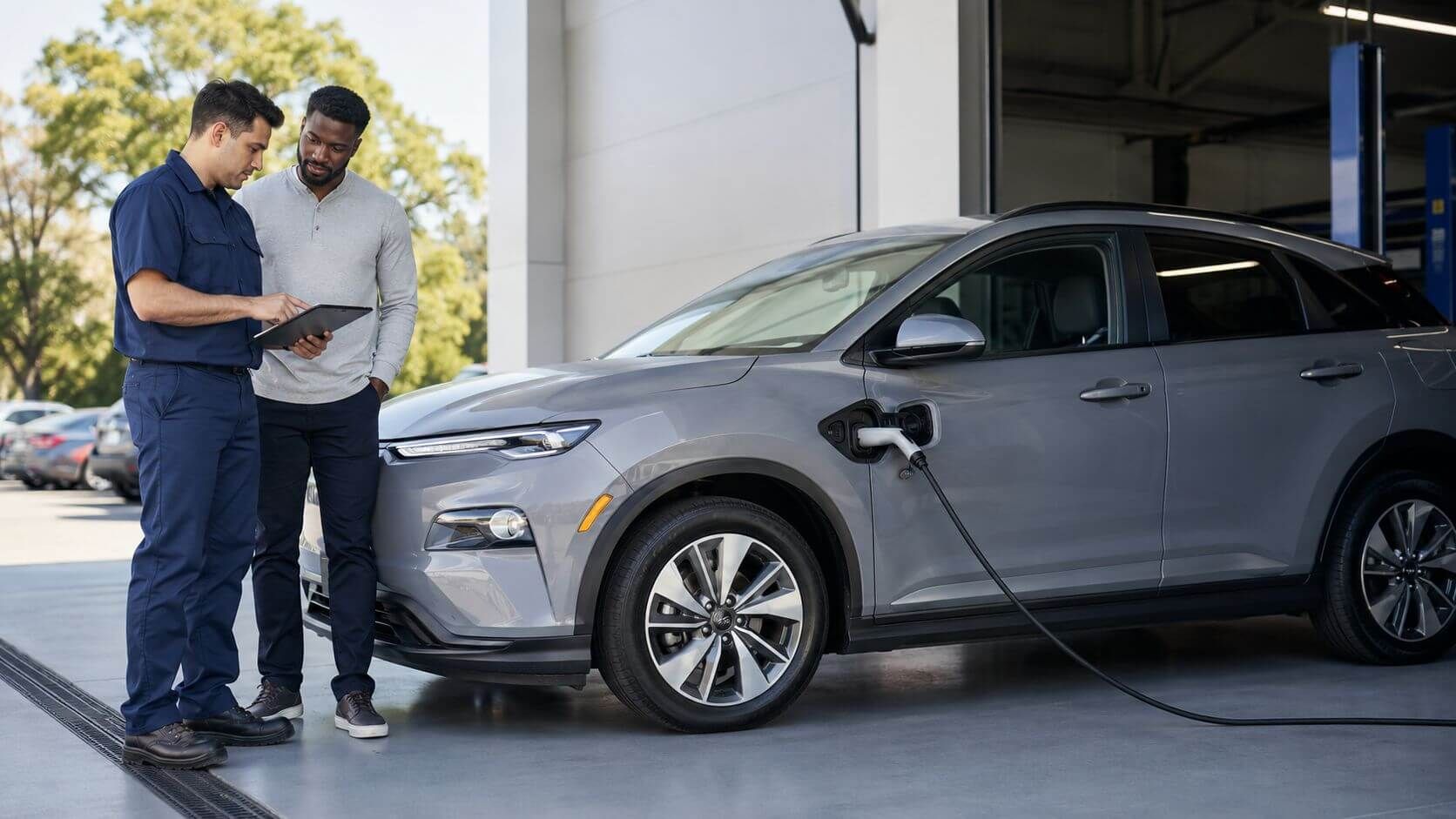
Buying a used hybrid or electric vehicle can be a smart move. You may get lower fuel costs, newer technology, and a smoother driving experience without paying the full price of a brand-new model. But shopping for a used hybrid, plug-in hybrid, or EV is different from buying a regular gas-powered car.
You are not only checking the engine, tires, title, mileage, and accident history. You also need to think about battery condition, charging access, warranty coverage, recall status, software updates, and long-term ownership costs.
Before you commit, use this checklist to slow down the process and look at the vehicle from every angle.
Why Used Hybrid and EV Checks Are Different
A traditional used car inspection usually focuses on the engine, transmission, suspension, brakes, body condition, and service records. Those checks still matter for hybrids and EVs, but electrified vehicles add another layer.
A hybrid has both a gas engine and an electric drive system. A plug-in hybrid adds a larger battery and charging equipment. A fully electric vehicle relies entirely on its battery pack, electric motor, charging system, and software.
That means the most important question is not only, “Does the car run well today?”
A better question is: “Will this vehicle still fit my driving, charging, budget, and repair needs over the next several years?”
Step 1: Confirm What Type of Electrified Vehicle You Are Buying
Start by identifying the exact type of vehicle.
A regular hybrid does not plug in. It uses a gas engine and an electric motor, but the battery charges through driving and regenerative braking. A plug-in hybrid, often called a PHEV, can be charged from an outlet or charging station and can drive some distance on electricity before the gas engine takes over. A full EV runs only on electricity and must be charged.
This matters because each type has different ownership needs.
A regular hybrid may be easier for buyers who do not have home charging. A plug-in hybrid can be a good fit if you have short daily drives and access to charging. A full EV can work well if the range fits your routine and you have reliable charging at home, work, or nearby public stations.
Before falling in love with a listing, confirm the vehicle type, trim, battery size, original equipment, and charging capability. A window sticker by VIN can help you review the vehicle’s original configuration, features, pricing, fuel economy information, and factory-installed options.
Step 2: Check Recalls by VIN
Do not skip the recall check. Hybrids and EVs can have recalls involving batteries, charging components, software, braking systems, airbags, steering, electrical systems, and other safety-related parts.
Before buying, run a check recalls by VIN search and compare the results with the seller’s claims. You can also check recall information through the National Highway Traffic Safety Administration.
Look for:
- Open safety recalls
- Battery-related recalls
- Charging system recalls
- Software-related recall remedies
- Brake, steering, airbag, or electrical recalls
- Recalls that may require parts that are not immediately available
If the vehicle has an open recall, ask whether the repair has already been scheduled. If the seller says it was fixed, ask for service documentation. If the recall is serious and still open, contact a dealer for that brand before buying so you know whether the remedy is available and how long the repair may take.
An open recall does not always mean you should walk away, but it should never be ignored.
Step 3: Review Battery Health Carefully
The battery is one of the most important parts of a used EV or plug-in hybrid. Battery packs are designed to last a long time, but they can still degrade over years of use, heat exposure, fast charging habits, high mileage, and general wear.
For EVs, ask the seller for a battery health report if the manufacturer or service center can provide one. Some vehicles show battery condition or estimated range through the dashboard or owner app. Others may require a dealer scan or third-party diagnostic tool.
Pay attention to:
- Current estimated range at a full charge
- Range compared with the vehicle’s original rating
- Battery warranty status
- Warning lights or battery-related alerts
- Charging speed problems
- Unusual range drops during a test drive
- Service records involving the high-voltage battery
For hybrids, ask whether the hybrid battery has ever been replaced or repaired. A hybrid with high mileage is not automatically a bad buy, but you should understand the potential cost if the battery needs major work later.
A low price may not be a bargain if the battery is weak, the warranty has expired, and replacement costs are high.
Step 4: Ask About Charging History and Charging Access
For plug-in hybrids and EVs, charging habits matter. A vehicle that was mostly charged at home and maintained properly may be easier to evaluate than one with unclear charging history.
Ask the seller:
- Did you charge mostly at home, work, or public stations?
- Did you often use DC fast charging?
- Is the charging cable included?
- Does the vehicle charge normally at Level 1 and Level 2?
- Has the charge port, onboard charger, or charging cable ever been repaired?
- Are there any charging errors or app connection issues?
Then think about your own charging situation.
If you can charge at home, a full EV may be easier to live with. If you rent, live in a condo, park on the street, or rely mostly on public chargers, you need to be more careful. The U.S. Department of Energy explains that most EV owners do most charging at home, with public and workplace charging supplementing residential charging.
Before buying, check local charging availability along your normal routes. Do not rely only on the seller’s claim that “chargers are everywhere.” Make sure the vehicle’s connector type, charging speed, and real-world range fit your life.
Step 5: Compare Real Ownership Costs
A used hybrid or EV may save money on fuel, but that does not automatically mean it is cheaper overall. Insurance, tires, repairs, registration fees, battery service, charging equipment, depreciation, and local electricity rates can change the equation.
Use an ownership cost by VIN check to estimate long-term expenses before deciding. This is especially useful when comparing a used hybrid against a gas vehicle, or a used EV against a plug-in hybrid.
Review these cost categories:
- Purchase price
- Financing cost
- Insurance
- Electricity or fuel cost
- Home charger installation
- Tires
- Maintenance
- Battery warranty status
- Expected repairs
- Depreciation and resale value
EVs may have fewer moving parts than gas vehicles, but tires, electronics, battery systems, and specialized repairs can still be expensive. For hybrids, you still have many gas-vehicle maintenance items, plus hybrid-specific components.
The best deal is not always the cheapest listing. It is the vehicle that fits your driving needs, budget, and risk tolerance.
Step 6: Run a Vehicle History Check
Battery and charging checks are important, but do not forget the basics. A clean-looking EV or hybrid can still have title problems, mileage inconsistencies, prior damage, theft records, salvage history, or auction records.
Before committing, run a vehicle history check and look for:
- Title brands
- Salvage or rebuilt history
- Reported odometer readings
- Theft records
- Prior sale or auction records
- Accident or damage indicators when available
- State-to-state title movement
- Lien or impound indicators
This matters even more for high-value EVs and hybrids because repairs can be costly. A vehicle that had flood exposure, structural damage, or electrical problems may be risky even if it drives normally during a short test drive.
If the report shows something concerning, ask for documentation. If the seller cannot explain it clearly, be cautious.
Step 7: Test Drive With EV and Hybrid Behavior in Mind
A good test drive should include city streets, stop-and-go traffic, moderate acceleration, braking, and highway driving if possible.
For hybrids, pay attention to how smoothly the vehicle switches between gas and electric power. Watch for warning lights, rough engine starts, unusual vibration, or poor regenerative braking behavior.
For EVs, watch the range estimate before and after the drive. Range estimates can move around depending on weather, driving style, and climate control use, but a sharp or unusual drop deserves attention.
During the test drive, check:
- Smooth acceleration
- Regenerative braking feel
- Brake pedal consistency
- Warning lights
- Climate control performance
- Charging port condition
- Unusual noises
- Dashboard range estimate
- Infotainment and app connectivity
- Driver-assistance features
Do not rush the test drive. Electrified vehicles can feel smooth even when there are hidden concerns, so combine the drive with records, recall checks, diagnostics, and a professional inspection.
Step 8: Verify Warranty and Service Records
Warranty coverage can make a big difference. Many hybrids and EVs have separate coverage for the battery or electric drive components, but terms vary by manufacturer, model year, mileage, state, and ownership status.
Ask for:
- Original in-service date
- Current mileage
- Battery warranty details
- Hybrid or EV component warranty details
- Service history
- Recall repair records
- Software update records
- Proof of major repairs
Do not rely only on verbal claims. If possible, call a dealer with the VIN and ask what warranty or recall information they can confirm.
Also check whether the vehicle has received important software updates. For some EVs and plug-in hybrids, software can affect charging behavior, battery management, range estimates, infotainment, driver-assistance systems, and recall remedies.
Step 9: Get a Qualified Inspection
A regular mechanic may be excellent with gas vehicles but not fully equipped to evaluate high-voltage systems. For a used hybrid or EV, look for a technician or shop that has experience with that specific type of vehicle.
A proper inspection may include:
- High-voltage battery scan
- Charging system test
- Diagnostic trouble code scan
- Brake and regenerative braking inspection
- Cooling system check
- Tire and suspension review
- Undercarriage inspection
- Evidence of prior flood or collision damage
- Verification of charging cable and accessories
This step may cost extra, but it can protect you from a much larger repair bill later.
Quick Checklist Before You Commit
Before signing, make sure you can answer “yes” to these questions:
- Did I confirm the exact vehicle type, trim, and original equipment?
- Did I check for open recalls by VIN?
- Did I review battery health or request a battery report?
- Did I confirm the vehicle charges properly?
- Did I check whether home or public charging fits my routine?
- Did I estimate total ownership costs?
- Did I run a vehicle history check?
- Did I review warranty and service records?
- Did I complete a proper test drive?
- Did I get a qualified inspection?
If you cannot answer yes to most of these, slow down. A good used hybrid or EV should hold up under careful review.
Final Takeaway
A used hybrid or EV can be a great purchase, but it deserves a more detailed pre-purchase process than a traditional gas-powered car. Battery condition, charging access, recall status, warranty coverage, and ownership costs can all affect whether the vehicle is a smart buy.
Start with the basics: verify the VIN, check recalls, review the history, inspect the battery, and understand the real cost of ownership. Then make sure the vehicle fits your daily driving and charging routine.
The right used hybrid or EV should not just look good in the listing. It should make sense for how you actually drive, charge, maintain, and budget.
FAQs
Should I buy a used EV with an open recall?
It depends on the recall. Some recalls are simple software updates or minor repairs, while others may involve safety-critical systems. Always check the recall details, ask whether the remedy is available, and contact a dealer before buying.
How do I check the battery health of a used EV?
Ask for a battery health report from the seller, dealer, or qualified EV technician. You can also compare the current full-charge range with the vehicle’s original range, but a diagnostic report is better than relying only on the dashboard estimate.
Is a used hybrid safer than a used EV?
Not necessarily. Safety depends on the specific vehicle, condition, maintenance history, recalls, repairs, and inspection results. Both hybrids and EVs can be good choices when properly checked.
Do I need home charging before buying a used EV?
Home charging is not absolutely required, but it makes EV ownership much easier for many drivers. If you cannot charge at home, confirm that public or workplace charging is reliable, convenient, and compatible with the vehicle.
What is the most important thing to check before buying a used hybrid or EV?
Battery condition, recall status, and vehicle history should be at the top of your list. A clean test drive is helpful, but it should not replace a VIN-based history check, recall lookup, and qualified inspection.